

Case Histories
 Firstly here is a letter from a shipper of Sonokeling rosewood from Java and Macassar ebony from Sulawesi exactly as he had written it to me:
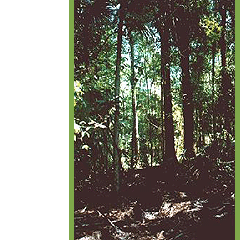
"Rosewood – all trees are cut manually, using power chain saws only. There is virtually no other mechanisation, which essentially maintains the entire forest. The trees themselves are fairly old, the younger trees are left untouched. This means in practice maybe 1 tree in 50 or 60 is suitable for cutting. The villagers that live in these forests depend upon these and other trees for their livelihood, and therefore take very good care of the forest, making sure other species are left untouched, and even for the rosewood, only old and mature trees cut, everything else is preserved for their future generations.
"All the rosewood comes from Java. The bad story of the environment is in the islands of Kalimantan (Borneo) and Sumatra, basically where there has been a lot of commercial logging by huge forestry companies, that bring in tons of equipment, and pretty much destroy thousands of hectares of forest every year. This is more for commercial species like Merbau, Meranti, Bangkiai etc, which are in high demand for construction, plywood and other commercial uses.
"Because of the nature of Rosewood trees, which are basically growing among a whole bunch of other species, it is not feasible for these large log companies to come in and do logging, and this ensures that the forests will not be destroyed.
"Macassar is a very well protected species by the government , and there are huge taxes on every cubic meter taken out of the forest. And also the amounts taken out are subject to strict supervision.
"Like rosewood, the local population tends to look after these trees. Contrary to popular belief there are still a lot of macassar ebony forests around, most of them however are totally inaccessible, either very high up in steep rocky mountains, or deep in the valleys in between, which means commercial logging is impossible. This of course protects the species.
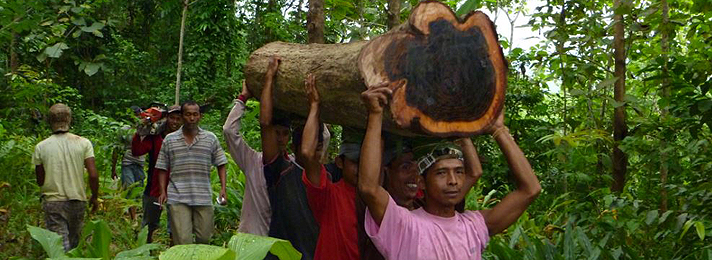
"Ebony is also logged strictly by hand, using chain saws, after which it is carried out of the forests either by teams of men or using animals. Trucks etc. cannot be used in this terrain. So this naturally limits how much can actually be taken out. Add the weather factor (when it rains, as it does frequently), nothing can be done.
"Both of these species are fairly well looked after, as people can appreciate their rarity even here, and the local people depend on them for their lifestyle."
Belize
 This shipper of Mahogany and Cigar Box Cedar etc. from Belize explains how things work over there
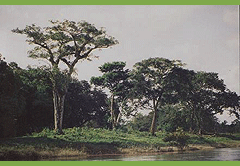
"Belize has about 65% forest cover, much of the rest is given over to growing sugar cane and other crops. Logging has been going on for upwards of 300 years, slash and burn agriculture was practised by a significant population of Mayans for 'thousands' of years before that, so virgin forests that may be seen elsewhere in the tropics are not really a factor in Belize. In fact the productive areas of forest (most highland areas are now protected) have been cut over many times and the forest has re-grown without difficulty.
"Logs are cut selectively subject to minimum diameters from forest actually owned by the company. Replanting is only done where the forest is left particularly sparse, otherwise it is preferred to leave 'mother' trees standing, which seed the area season by season rather than just the once, ensuring successful re-growth. Cutting is presently going on for a second cycle in some of the early parcels of land acquired by the company because some of the undersized trees are now fully grown.
"Belize relies on the export of timber and eco-tourism for most foreign currency earnings and the preservation of the forest is vital for both. Belize is about the size of Wales with a population about the size of Wolverhampton."
India
We import Indian Rosewood (Dalbergia latifolia) from India for furniture and Musical instrument construction.
India has had very strict and restrictive laws for more than 35 years regarding exports of their native timbers. These laws recognise that timber is a limited resource and seek to create high levels of added value while at the same time limiting the amount of timber being taken from the forests. The supply chain for Indian Rosewood goes like this:
1. A limited quantity of Indian rosewood trees are felled each year in government owned forests in the states of Kerala and Karnataka under the supervision of the Indian Government.
2. The logs are assembled in lots for periodical government controlled auctions.
3. Only approved buyers are invited to bid at these auctions.
4. These buyers will have different ends in mind. Some will sell to the Indian market, some will specialise in export, some will produce veneer, some will produce musical instrument components, some will produce furniture parts, and so on. All products destined for export must meet with the requirements of the law and drawings and specs of the export customer’s requirements are sent to export officials for approval before work starts.
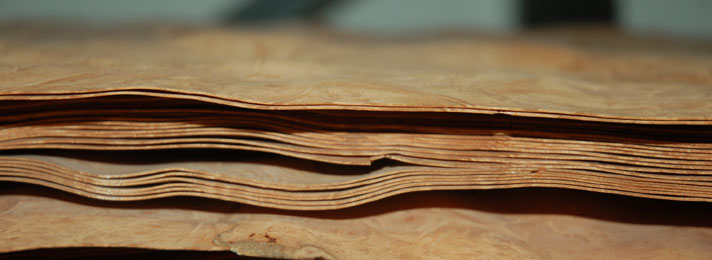
5. Export regulations require Indian rosewood to be cut into veneer or finished components. Our guitar back and sides sets export easily because the law allows for veneers of up to 5mm thickness. Other items become defined as finished components. If the desired items for export are not approved for export they do not leave India.
6. Import of timber in to the EC is now done under the ‘Due diligence’ EUTR regulations confirming legitimate sourcing.
Shop Online
Visit Timberline's online shop
Timberline Catalogues
We also produce a Wood School booklet, see here.
Follow us on Instagram!
Join our Mailing List:
Subscribe to our newsletters and recieve updates on new stock, products and industry news.
Click here to sign-up now.
Search Timberline's site:
Accessibility | Privacy Policy | Cookie Policy | T&Cs | © Robert Smith 2026 |